The Role of Semantic HTML in SEO and Accessibility
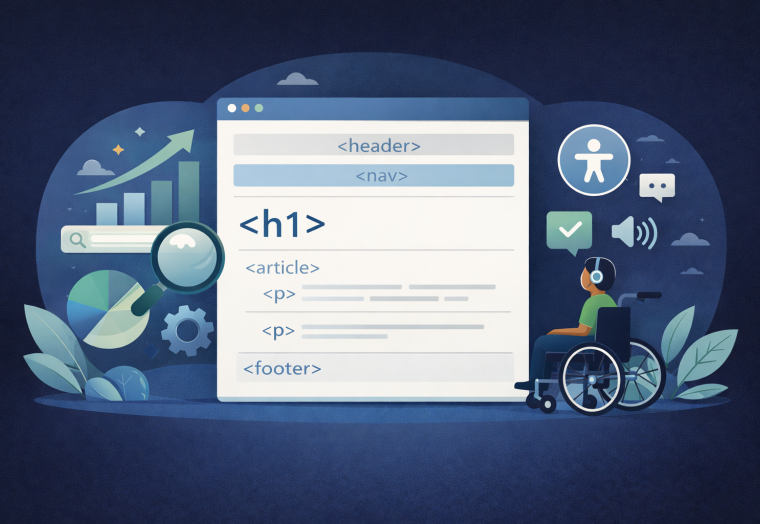
Semantic HTML is more than just clean code. It’s the foundation of a web that is both discoverable and inclusive. By using HTML elements that carry meaning, developers can create websites that search engines understand more easily and that assistive technologies can navigate more effectively. In other words, semantic HTML bridges the gap between technical optimisation and human-centred design.
What Is Semantic HTML?
Semantic HTML refers to the use of HTML elements that convey meaning about the content they contain. Instead of relying on generic div or span tags, semantic elements like header, article, nav, and footer describe the role of the content within the page.
header: Introduces the page or a section.nav: Defines navigation links.main: Represents the main body of a page.article: Represents a self-contained piece of content.section: Groups related content.footer: Provides closing information or links.
These elements make the structure of a webpage more transparent to both machines and humans.
Semantic HTML and SEO
Search engines thrive on context. Semantic HTML provides that context by clarifying the hierarchy and purpose of content. This has several benefits:
- Improved crawling and indexing: Search engines can better interpret the importance of different sections of a page.
- Enhanced rich snippets: Proper use of semantic tags can lead to more informative search results, such as featured snippets or sitelinks.
- Keyword relevance: Semantic structure helps search engines understand how keywords relate to the overall content, improving ranking potential.
For example, wrapping a blog post in article signals to search engines that the content is a standalone piece worth indexing.
Semantic HTML and Accessibility
Accessibility is about ensuring that all users, including those with disabilities, can interact with your website. Semantic HTML plays a critical role here:
- Screen readers: Assistive technologies rely on semantic elements to announce content meaningfully. A
navtag tells the user they’re entering a navigation section, whilemainindicates the core content. - Keyboard navigation: Semantic structure supports functionality and focus management for interactive components.
- Consistency across devices: Semantic elements provide predictable behaviour across browsers and assistive tools.
By using semantic HTML, developers reduce barriers and create a more inclusive digital experience.
Best Practices
To maximise the benefits of semantic HTML for both SEO and accessibility:
- Use
header,main,nav,asideandfooterto logically structure your pages. - Use headings (
h1-h6) to establish a clear hierarchy. - Avoid misuse of generic elements (e.g., don’t use
divorspanfor headings or buttons). - Combine semantic HTML with ARIA roles only when necessary. Semantic elements should be the default.
Semantic HTML is better for everyone
Semantic HTML is not just a coding preference; it’s a strategic choice that enhances both visibility and usability. For businesses, it means better search performance. For users, it means a more accessible and intuitive experience. By embracing semantic HTML, developers contribute to a web that is smarter, fairer, and more human-centred.