Why redesigning your Silverstripe website is smarter than migrating to WordPress
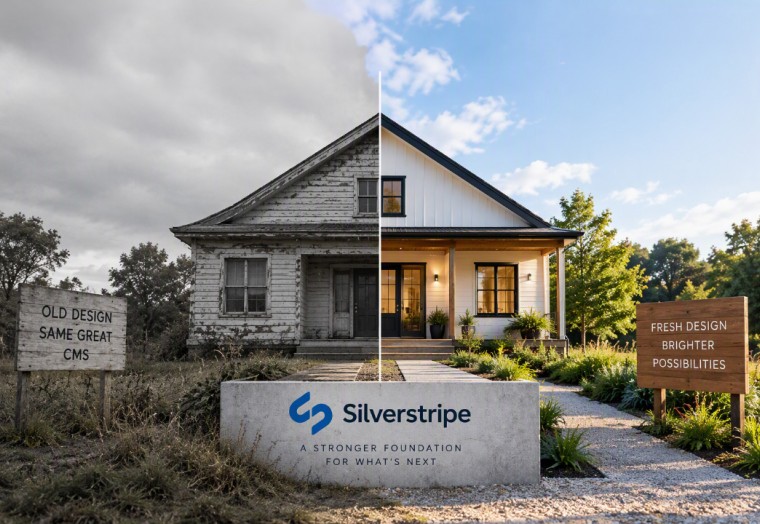
Every website owner eventually faces the same challenge: their website starts to look dated.
Design trends change. User expectations evolve. Brands refresh. What looked modern five years ago feels tired today.
Too often, the response is to throw everything away and start again on a completely different platform. We've seen many organisations move from Silverstripe to WordPress simply because they wanted a new design.
In most cases, that's like demolishing a perfectly good building because you'd like to repaint the walls.
A website platform should outlive its design
One of Silverstripe's greatest strengths is its longevity.
Well-built Silverstripe websites are designed with a clear separation between content, functionality, and presentation. The content management system, data structures, user permissions, workflows, and integrations can continue serving an organisation for many years while the visual layer evolves around them.
A website redesign should often be exactly that: a redesign.
The underlying platform, content architecture, and business logic can remain intact while the front-end receives a complete visual transformation.
When built and maintained correctly, a Silverstripe site can undergo multiple design refreshes during its lifetime without requiring a complete rebuild.
The hidden cost of platform migrations
When organisations decide to move from Silverstripe to another CMS solely for a design update, they often end up paying for work they've already funded once.
- Content structures must be recreated.
- Page templates need rebuilding.
- Integrations must be reconfigured.
- SEO settings require auditing and migration.
- Redirects need implementation.
- User permissions and workflows have to be replicated.
- Content frequently needs cleaning and importing.
All of this effort exists before a single design improvement is delivered.
The end result may look newer, but much of the project's budget has been spent reproducing functionality that already existed.
If the original Silverstripe implementation was sound, a redesign within the existing platform delivers the same visual result at a significantly lower cost.
Security matters more than ever
Security should be a major consideration when evaluating any CMS platform.
Silverstripe's architecture and relatively smaller attack surface have traditionally made it an attractive choice for organisations that prioritise security and stability. Because it powers a smaller share of websites than WordPress, it is also less frequently targeted by automated attacks aimed at exploiting common plugin vulnerabilities.
WordPress itself can certainly be secured when managed properly. However, WordPress websites rely heavily on third-party themes and plugins, creating additional dependencies that require constant monitoring, updating, and maintenance. Every additional plugin becomes another component that introduces security risks, compatibility issues, or ongoing maintenance overhead.
For organisations already operating a secure and stable Silverstripe website, moving platforms increases complexity rather than reduce it.
Sustainability isn't just about hosting
Website sustainability is often discussed in terms of green hosting and energy-efficient infrastructure. But software sustainability matters too. Rebuilding an entire website platform consumes significant development resources, testing effort, project management time, and organisational attention.
If the existing CMS already meets the organisation's needs, replacing it simply to achieve a different visual appearance creates unnecessary digital waste.
A redesign within Silverstripe builds upon existing investments rather than discarding them. It preserves years of development work while still delivering a modern user experience. That's a more sustainable approach for both budgets and resources.
Future-proofing your digital investment
A website should be viewed as a long-term business asset. When organisations invest in a platform, they should expect to evolve it over time rather than repeatedly replace it.
Silverstripe excels in this area because it is highly customisable, developer-friendly, and capable of supporting ongoing design evolution without forcing businesses into repeated platform migrations.
A well-architected Silverstripe website can:
- Support multiple design generations
- Accommodate changing user requirements
- Integrate with new services and systems
- Scale alongside organisational growth
- Maintain security and performance standards
- Protect previous development investments
These are qualities that deliver value year after year.
The smart question to ask
Before approving a migration from Silverstripe to another CMS, organisations should ask a simple question:
Are we changing platforms because the current system no longer meets our needs, or because we simply want a new design?
If the answer is "we want a new design", rebuilding the entire website may not be the most economical decision.
In many cases, retaining Silverstripe and modernising the presentation layer will deliver the same visual outcome, preserve existing functionality, maintain a strong security posture, and cost substantially less than a full platform migration.
A website's design should evolve regularly. Its foundation shouldn't need rebuilding every time the paint colour changes.